


E-mailing from the basics
Karel Koupil | 9. 1. 2026

In today’s digital age, it is difficult to find anyone who has never received a marketing email. Although it may seem that this tool is losing its importance in the age of social media and online advertising, this is not true. Email marketing is still one of the most effective methods of communicating with your target audience, as proven by statistics and successful campaigns around the world.
Email marketing is a key tool that enables companies to communicate with customers via email. This approach not only allows companies to inform customers about news, events and offers, but also to build long-term relationships and increase customer loyalty.
We distinguish between two basic types of emails: marketing and transactional emails. Each has a specific role in communicating with customers.
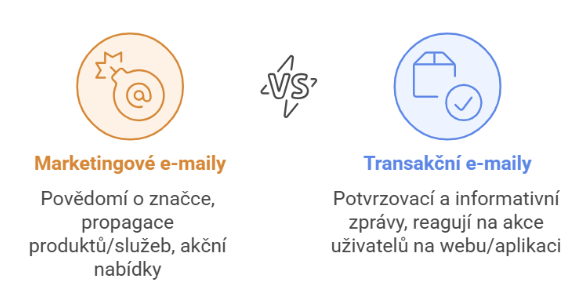
Marketing emails: These focus primarily on promoting products, services or events. The aim of marketing emails is to generate interest in the company’s offerings, strengthen brand awareness or generate sales. These emails often contain calls to action that motivate customers to interact.
Transactional emails: Transactional emails are sent automatically in response to specific customer actions. Typically, these include order confirmations, payment receipts, order status updates, etc. These messages are directly linked to customer activity.
Both types of emails are important for building and maintaining customer relationships. Proper use of both types of emails can significantly contribute to the success of a company’s overall communication strategy.
Managing email contacts
When collecting email contacts, it is essential to comply with legal regulations. In the European Union, this is the GDPR. Before you start sending marketing content to users, they must give their explicit consent. In addition, you must make it easy for them to unsubscribe from your emails.

